learn
Bezokolicznik
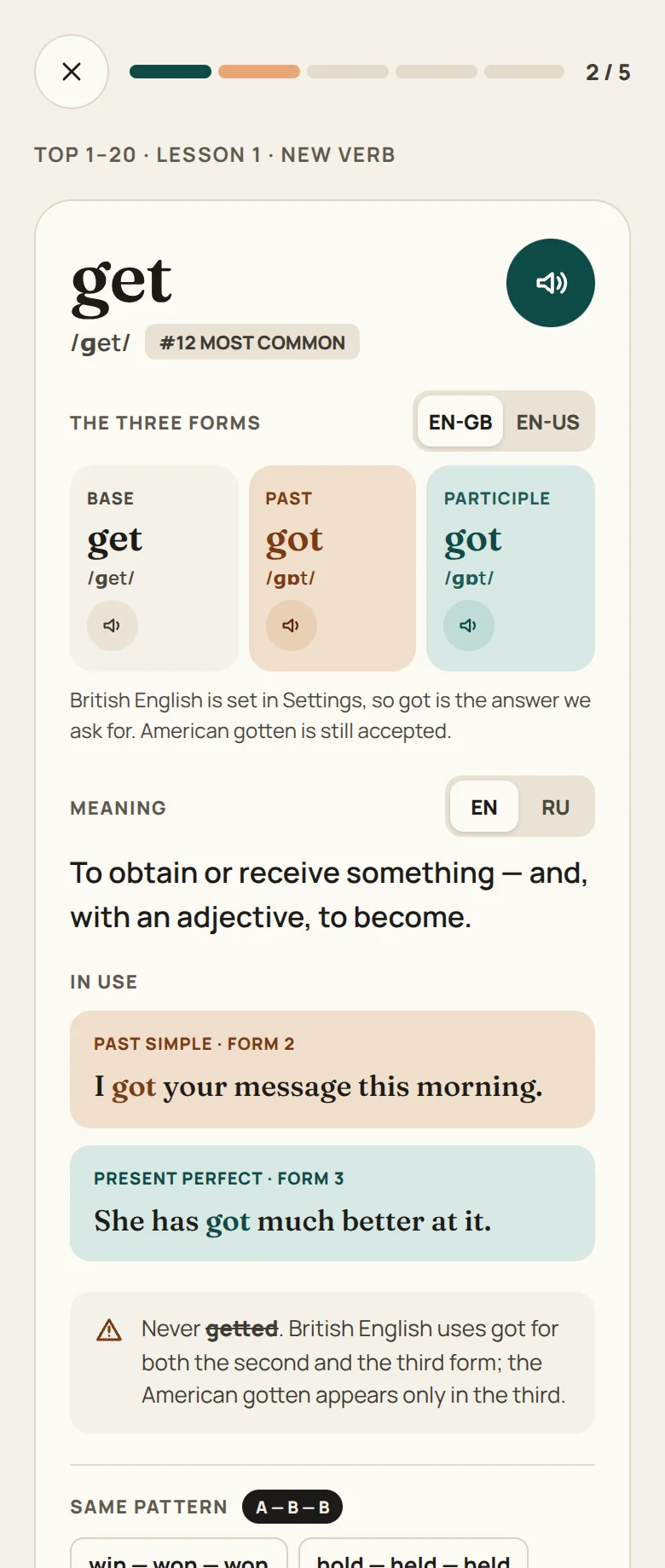
learn
/lɜːn//lɜːrn/
Past Simple
learned / learntlearned
/lɜːnd/ /lɜːnt//lɜːrnd/
Past Participle
learned / learntlearned
/lɜːnd/ /lɜːnt//lɜːrnd/
TłumaczenieA1
uczyć się, przyswajać
to learn something by heart
Znaczenie po angielsku
to get knowledge or a new skill
Przykłady
- Pytanie · Forma 1Did you learn to swim when you were little?
- Po czasowniku modalnym · Forma 1I’d like to learn Italian before our trip to Rome.
- Past Simple · Forma 2Leo learnt to drive last summer in his dad’s old car.Leo learned to drive last summer in his dad’s old car.
- Past Simple · Forma 2Yesterday we learnt that our flight had been cancelled.Yesterday we learned that our flight had been cancelled.
- Present Perfect · Forma 3Priya has learnt a lot of new words since she moved to Madrid.Priya has learned a lot of new words since she moved to Madrid.
- Past Perfect · Forma 3By the age of six, Ben had learnt to read.By the age of six, Ben had learned to read.
Uwaga
Learnt i learned są poprawne w brytyjskim angielskim; Amerykanie mówią learned. Tylko przymiotnik learned /ˈlɜːnɪd/ („bardzo wykształcony”) ma dwie sylaby.
Ten sam wzorzec
A — B — BDruga i trzecia forma są takie same
 Irregular Verbs
Naucz się trzech form na dobre
Krótkie lekcje według częstości lub wzorca, nagranie każdej formy i codzienne powtórki, które przypominają dokładnie te czasowniki, które zaraz byś zapomniał.

 Zainstaluj na telefonieZeskanuj aparatem telefonu, aby pobrać aplikację