bring on
/ˌbrɪŋ ˈɒn/
EM PORTUGUÊS
provocar, desencadear, causar
To make an illness or a medical problem start
EM PORTUGUÊSTRADUÇÃO EXATA
provocar, desencadear, causar
Exemplos de uso
- 1Stress can bring on headaches in some people.
- 2Lily gets asthma attacks, and running in cold air often brings them on.
- 3In spring, Aisha’s hay fever is often brought on by freshly cut grass.
- 4Ben has a migraine again. Do you know what brought it on?
- 5The doctor asked whether anything special had brought on the chest pains.
Ordem das palavras
- bring on a headache
- bring a headache on
- bring it on
- bring on it
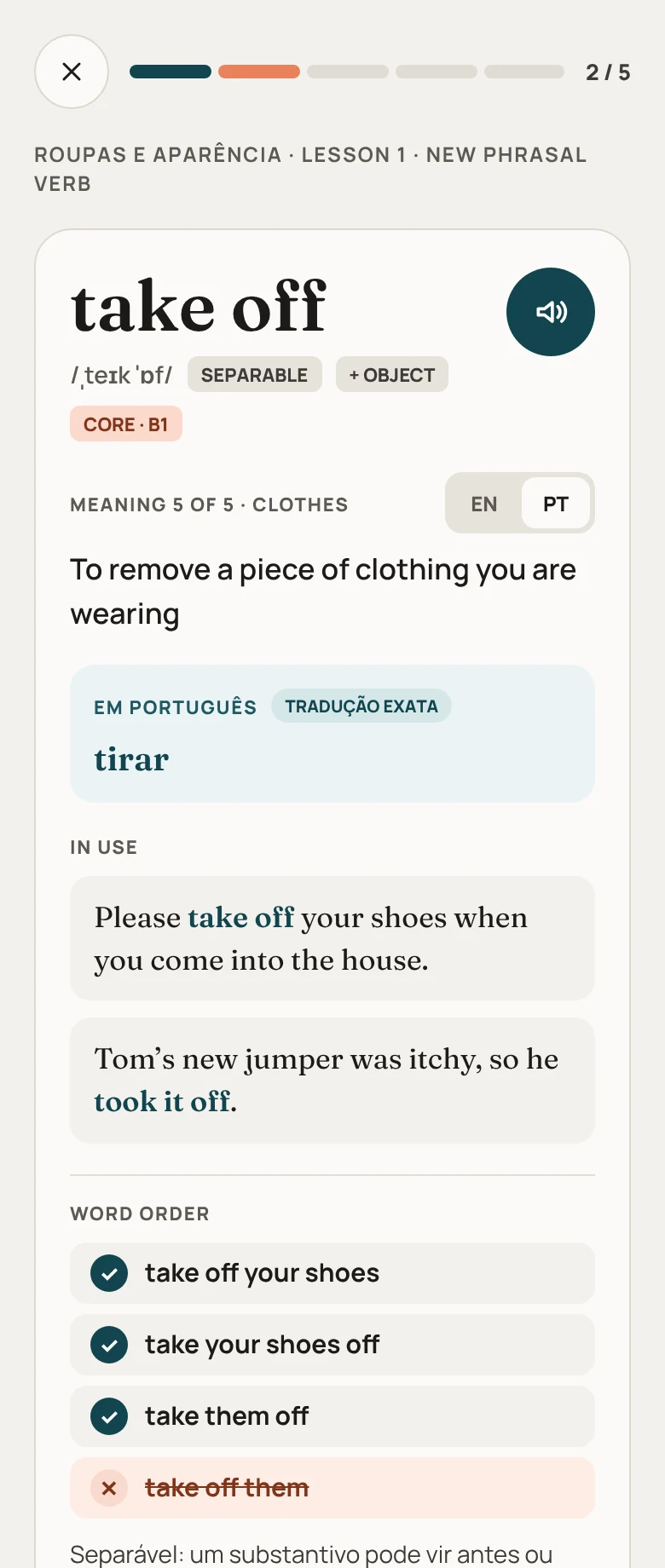
Separável: um substantivo pode vir antes ou depois de on. Um pronome (it, them, him) sempre fica entre o verbo e on.
To send a player onto the field during a game
EM PORTUGUÊSTRADUÇÃO EXATA
colocar em campo, lançar (no jogo)
Exemplos de uso
- 1The manager brought on a fresh striker for the last ten minutes.
- 2Our goalkeeper was injured, so the coach brought me on at half-time.
- 3With ten minutes left, the coach brought on a young striker from the bench.
- 4I’ve been waiting all game, so will you bring me on for the last five minutes?
- 5Why didn’t the manager bring on the new signing until the eighty-fifth minute?
Ordem das palavras
- bring on a substitute
- bring a substitute on
- bring him on
- bring on him
Separável: um substantivo pode vir antes ou depois de on. Um pronome (it, them, him) sempre fica entre o verbo e on.
 Phrasal Verbs
1000 phrasal verbs em 25 temas, com revisões que não deixam você esquecer
Aqui são só algumas perguntas. No app, 16 modos de prática, cada significado em seu próprio cartão, traduções e repetição espaçada que avisa quando é hora de revisar.
Em breveiOS e Android