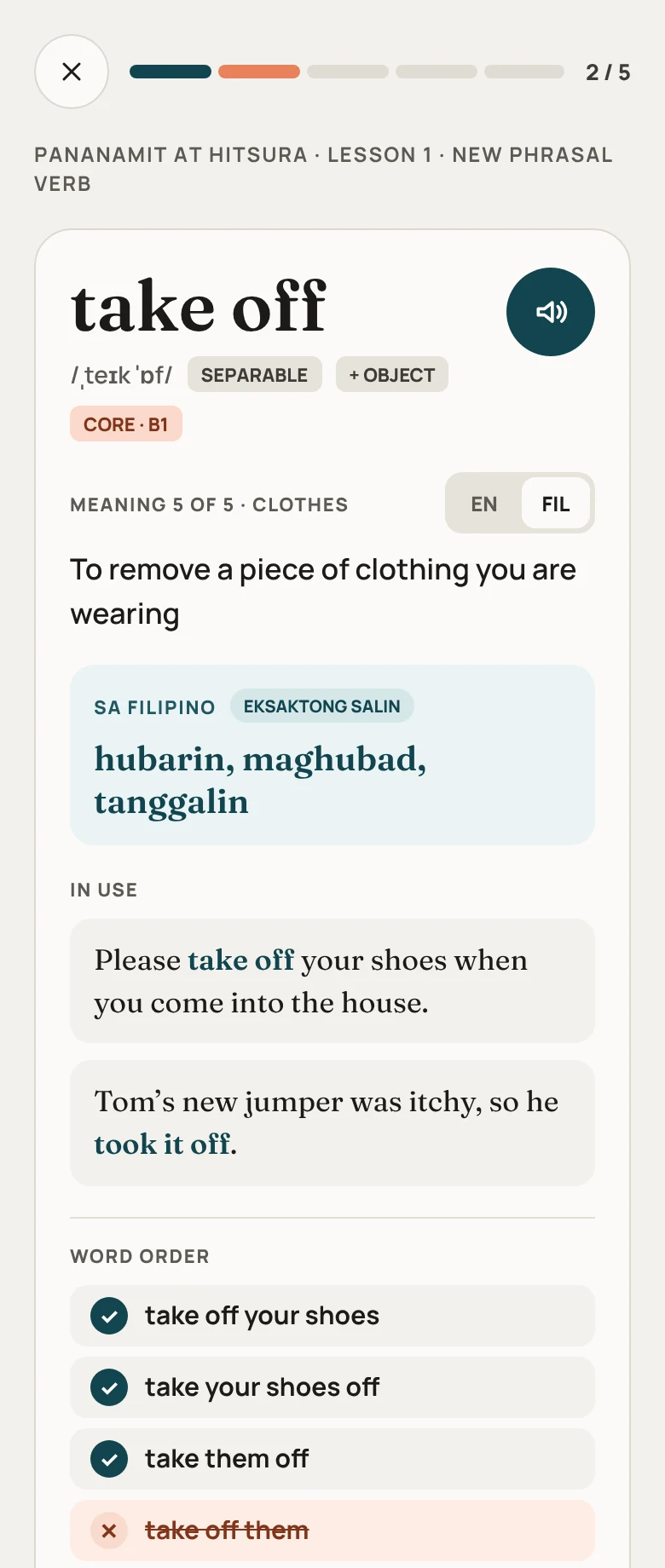
work up
/ˌwɜːk ˈʌp/
SA FILIPINO
magpaalab ng damdamin ng isang tao, mag-init ang ulo
To make yourself or someone very upset, angry or excited
SA FILIPINOMALAPIT NA SALIN
magpaalab ng damdamin ng isang tao, mag-init ang ulo
Paano ginagamit
- 1Try not to work yourself up before the exam; you know the material.
- 2The coach’s speech worked the players up into a frenzy before the match.
- 3My sister had worked herself up so much that she couldn’t sleep.
- 4There’s no need to get so worked up about a small scratch on the car.
- 5Why did you let the kids watch that film? It’s worked them up and now they won’t settle.
Word order
- work the children up
- work them up
- work up the children
Ang object ay laging nasa pagitan ng verb at ng up.
To make yourself hungry by doing exercise or activity
SA FILIPINOMALAPIT NA SALIN
ganahang kumain, magutom
Paano ginagamit
- 1We walked along the cliffs all morning and worked up a real appetite.
- 2Go for a bike ride before dinner — it’ll help you work up an appetite.
- 3After three hours of digging in the garden, Ben had worked up a huge appetite.
- 4If we walk to the restaurant instead of taking a taxi, we might work up an appetite.
- 5The children played football on the beach until they’d worked up an appetite for lunch.
Word order
- work up an appetite
- work an appetite up
Di mapaghihiwalay: ang object ay laging kasunod ng up — noun man o pronoun.
 Phrasal Verbs
1000 phrasal verbs sa 25 paksa — may review para hindi mo makalimutan
Dito, ilang tanong lang. Sa app, may 16 na practice mode, sariling card para sa bawat kahulugan, salin sa Filipino at spaced repetition na nagsasabi kung kailan ka dapat mag-review.
Malapit naiOS at Android