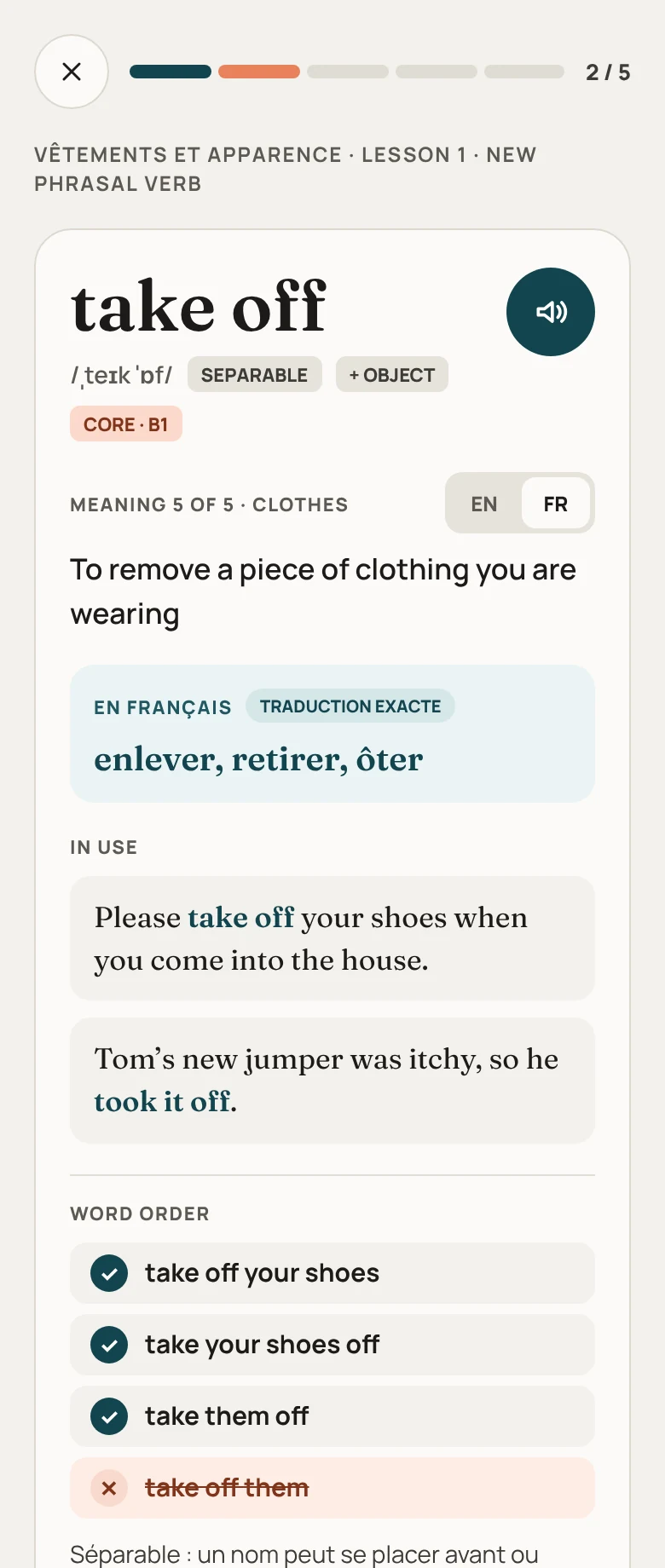
go off
/ˌɡəʊ ˈɒf/
EN FRANÇAIS
ne plus aimer, se lasser de, se détacher de
To stop liking someone or something
EN FRANÇAISTRADUCTION PROCHE
ne plus aimer, se lasser de, se détacher de
En contexte
- 1I used to love spicy food, but I’ve gone off it lately.
- 2She went off the idea of camping when she saw the weather forecast.
- 3Have you gone off football? You never watch the matches any more.
- 4Priya went off the band after their third album, which she found boring.
- 5My son has gone off his swimming lessons and now refuses to get in the pool.
Ordre des mots
- go off coffee
- go off it
- go coffee off
Inséparable : le complément se place toujours après off — un nom comme un pronom.
Contraire
take to
To become bad and not safe to eat or drink
EN FRANÇAISTRADUCTION EXACTE
se gâter, tourner (lait), s'avarier
En contexte
- 1This milk smells strange; I think it’s gone off.
- 2Fish goes off quickly, so keep it in the fridge.
- 3Don’t drink that orange juice, because it went off days ago.
- 4The cheese will go off if you leave it out of the fridge.
- 5We had to throw the chicken away because it had gone off.
To start ringing or making a loud noise, of an alarm or timer
EN FRANÇAISTRADUCTION EXACTE
sonner, se déclencher
En contexte
- 1My alarm went off at six, but I stayed in bed for another ten minutes.
- 2The fire alarm goes off every time someone burns the toast.
- 3Didn’t your alarm go off this morning? You’re very late.
- 4Leo jumped when the kitchen timer suddenly went off behind him.
- 5Our neighbour’s car alarm went off three times last night and woke the whole street.
 Phrasal Verbs
1000 phrasal verbs en 25 thèmes — avec des révisions qui les gardent en mémoire
Ici, quelques questions. Dans l’app : 16 modes d’entraînement, chaque sens sur sa propre fiche, des traductions et une répétition espacée qui vous dit quand réviser.
Bientôt disponibleiOS et Android