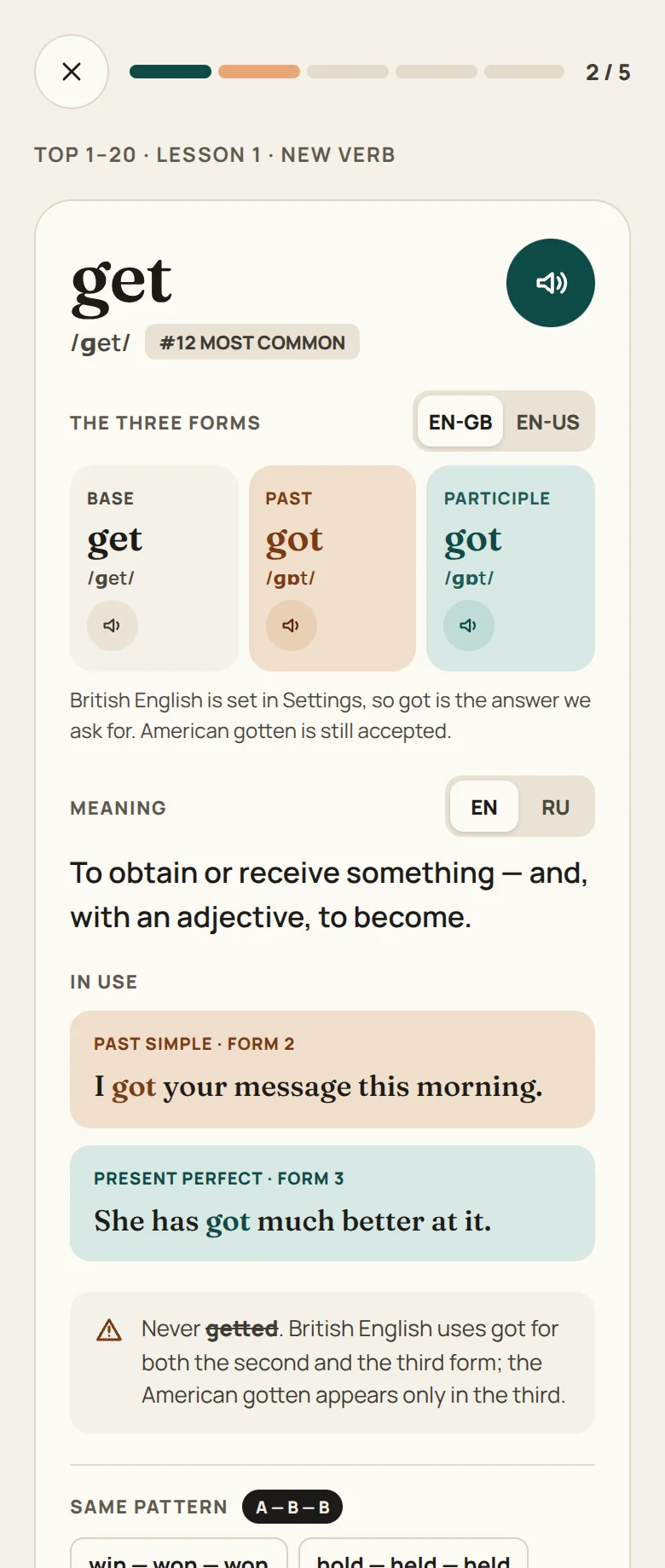
blow
Grundform
blow
/bləʊ/
Simple Past
blew
/bluː/
Past Participle
blown
/bləʊn/
ÜbersetzungA2
blasen, pusten, wehen
to blow your nose
Bedeutung auf Englisch
to send out air from your mouth; to move in the wind
Beispiele
- Imperativ · 1. FormBlow your nose, then wash your hands.
- Nach einem Modalverb · 1. FormThe wind could blow the tent away tonight.
- Simple Past · 2. FormLast night the wind blew a tree down across our road.
- Simple Past · 2. FormYesterday the referee blew the whistle two minutes early.
- Passiv · 3. FormAll the leaves were blown into a pile by the gate.
- Present Perfect · 3. FormHave you blown up all the balloons for the party?
Achtung
Blew klingt genau wie blue /bluː/: the wind blew all night. Das Partizip Perfekt ist blown, nie blewn oder blowen: it has blown away.
Gleiches Muster
A — B — CAlle drei Formen sind verschieden
 Irregular Verbs
Lerne alle drei Formen für immer
Kurze Lektionen nach Häufigkeit oder Muster, Audio für jede Form und tägliche Wiederholungen, die genau die Verben zurückholen, die du gerade vergisst.

 Aufs Handy holenMit der Handykamera scannen, um die App herunterzuladen