blow
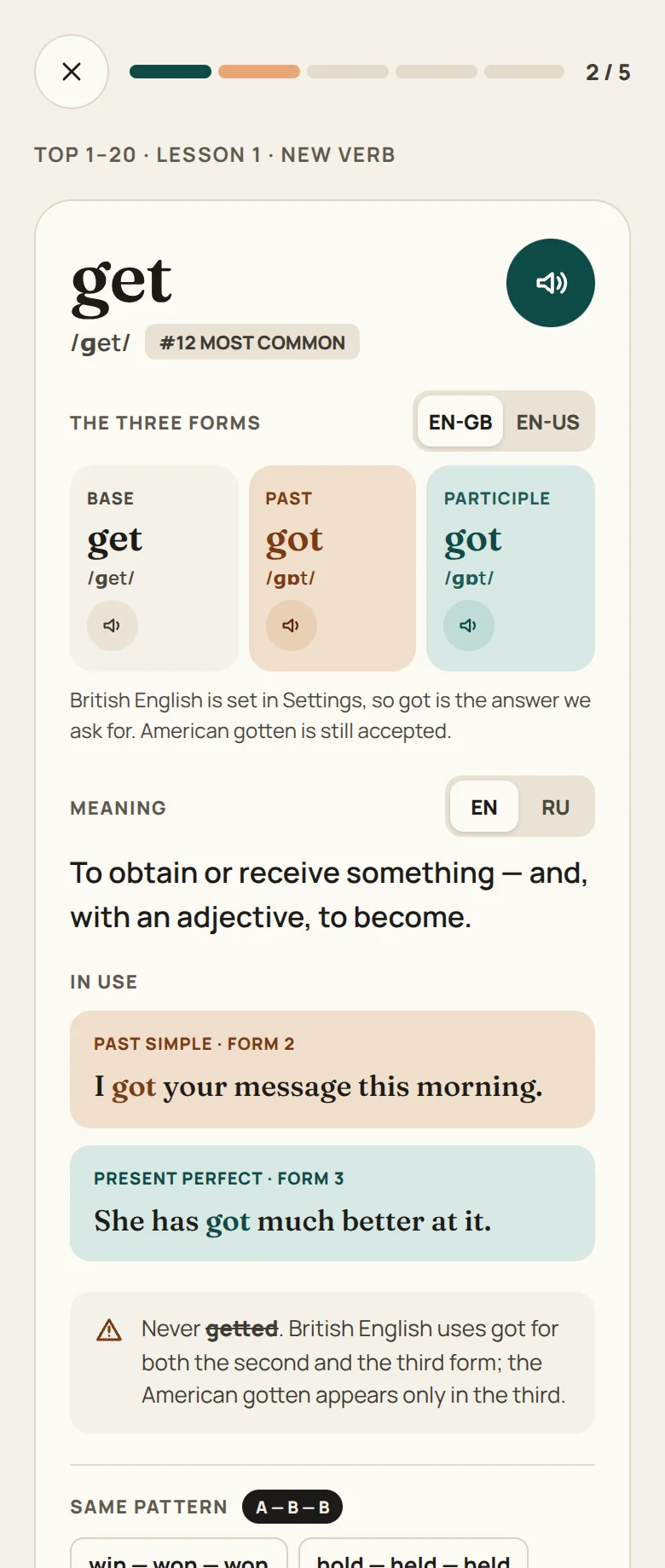
Base verbale
blow
/bləʊ/
Prétérit
blew
/bluː/
Participe passé
blown
/bləʊn/
TraductionA2
souffler, expulser de l'air
to blow your nose
Sens en anglais
to send out air from your mouth; to move in the wind
Exemples
- Impératif · Forme 1Blow your nose, then wash your hands.
- Après un modal · Forme 1The wind could blow the tent away tonight.
- Prétérit · Forme 2Last night the wind blew a tree down across our road.
- Prétérit · Forme 2Yesterday the referee blew the whistle two minutes early.
- Passif · Forme 3All the leaves were blown into a pile by the gate.
- Present perfect · Forme 3Have you blown up all the balloons for the party?
Attention
Blew se prononce exactement comme blue /bluː/ : the wind blew all night. Le participe passé est blown, jamais blewn ni blowen : it has blown away.
Même modèle
A — B — CLes trois formes sont différentes
 Irregular Verbs
Retenez les trois formes pour de bon
De courtes leçons par fréquence ou par modèle, l’audio de chaque forme et des révisions quotidiennes qui ramènent justement les verbes que vous êtes en train d’oublier.

 Installer sur votre téléphoneScannez avec l’appareil photo de votre téléphone pour télécharger l’app