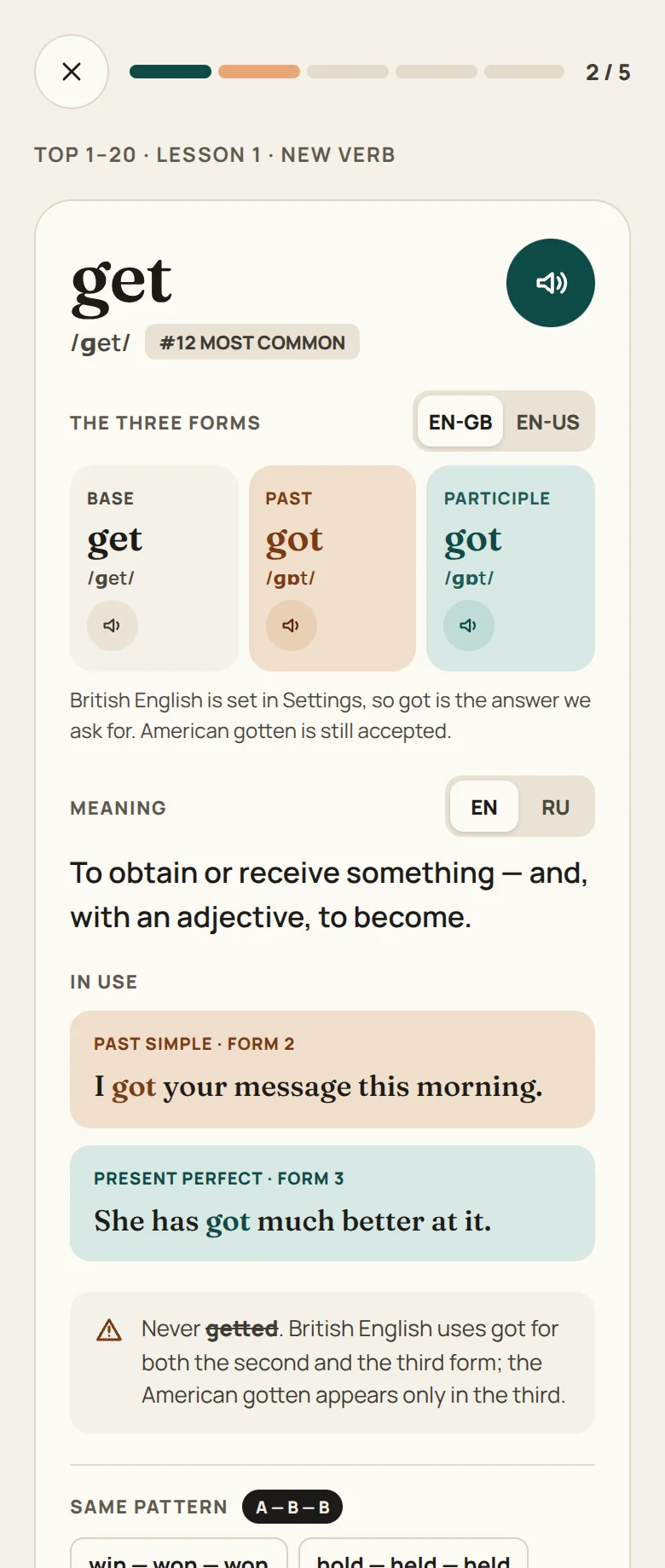
blow
Forma base
blow
/bləʊ/
Simple past
blew
/bluː/
Participio passato
blown
/bləʊn/
TraduzioneA2
soffiare, spirare
to blow your nose
Significato in inglese
to send out air from your mouth; to move in the wind
Esempi
- Imperativo · Forma 1Blow your nose, then wash your hands.
- Dopo un verbo modale · Forma 1The wind could blow the tent away tonight.
- Simple past · Forma 2Last night the wind blew a tree down across our road.
- Simple past · Forma 2Yesterday the referee blew the whistle two minutes early.
- Passivo · Forma 3All the leaves were blown into a pile by the gate.
- Present perfect · Forma 3Have you blown up all the balloons for the party?
Attenzione
Blew suona come blue /bluː/: the wind blew all night. Il participio passato è blown, mai blewn o blowen: it has blown away.
Stesso schema
A — B — CLe tre forme sono tutte diverse
 Irregular Verbs
Impara le tre forme una volta per tutte
Lezioni brevi per frequenza o per schema, l’audio di ogni forma e ripassi quotidiani che ti ripropongono proprio i verbi che stai per dimenticare.

 Installala sul telefonoInquadra con la fotocamera del telefono per scaricare l’app