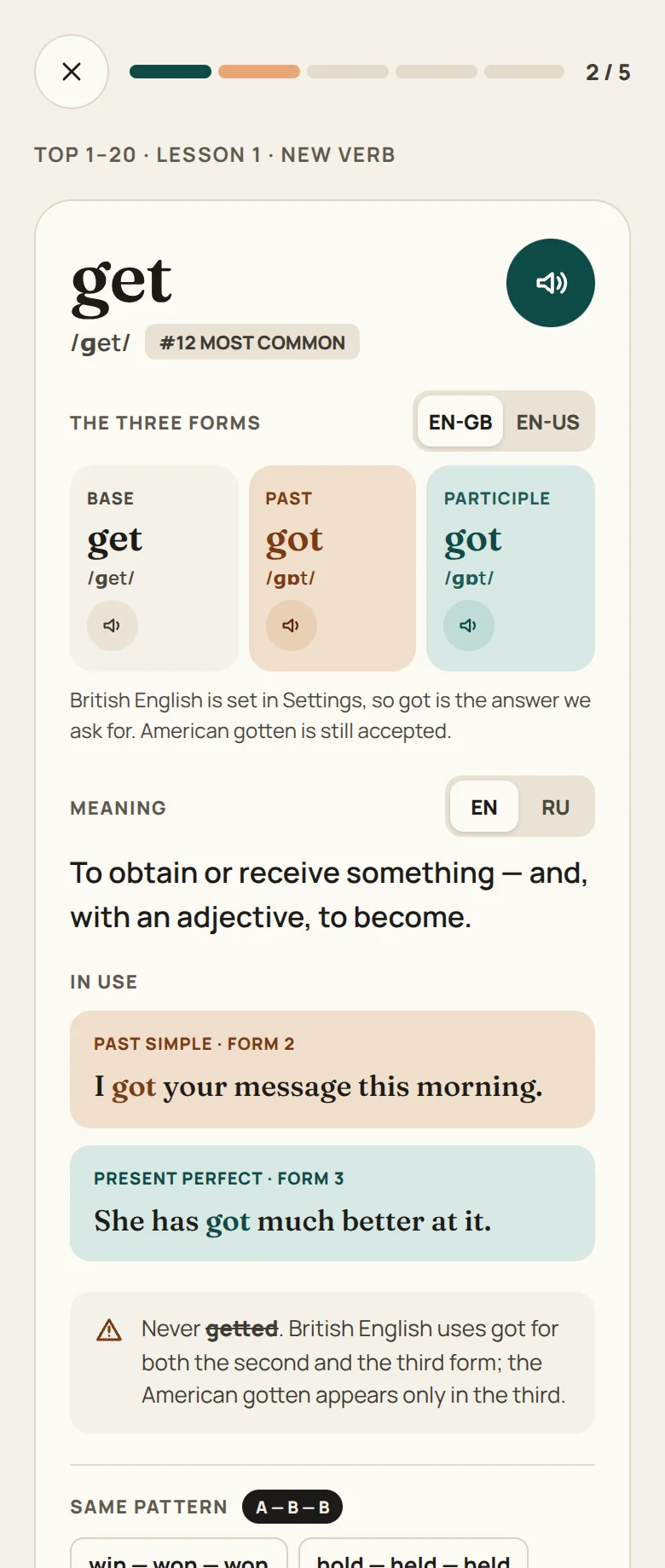
bear
Base form
bear
/beə(r)//ber/
Past tense
bore
/bɔː(r)//bɔːr/
Past participle
borne
/bɔːn//bɔːrn/
Kahulugan sa FilipinoB2
magtiis, magpasan
to grin and bear it
Kahulugan sa English
to accept something unpleasant; to carry weight
Sa pangungusap
- Pagkatapos ng modal verb · Ika-1 anyoI can’t bear the noise from the flat upstairs any longer.
- Negative · Ika-1 anyoShe doesn’t bear grudges, even after a big argument.
- Past simple · Ika-2 anyoLast winter Grandpa bore the pain of his bad knee without complaining.
- Past simple · Ika-2 anyoThe old bridge bore the weight of the lorry yesterday, but only just.
- Passive voice · Ika-3 anyoAll the costs of the repair will be borne by the landlord.
- Present perfect · Ika-3 anyoHe has borne most of the blame for the defeat.
Mag-ingat
Sa sanggol, born ang ginagamit; sa lahat ng iba pa, borne: costs borne by the council. Ang past tense ay bore: she bore the pain.
 Irregular Verbs
Kabisaduhin ang tatlong anyo nang pangmatagalan
Maiikling aralin ayon sa dalas o pattern, audio sa bawat anyo at araw-araw na review na ibinabalik mismo ang mga verb na malapit mo nang makalimutan.

 I-install sa phone moI-scan gamit ang camera ng phone mo para i-download ang app