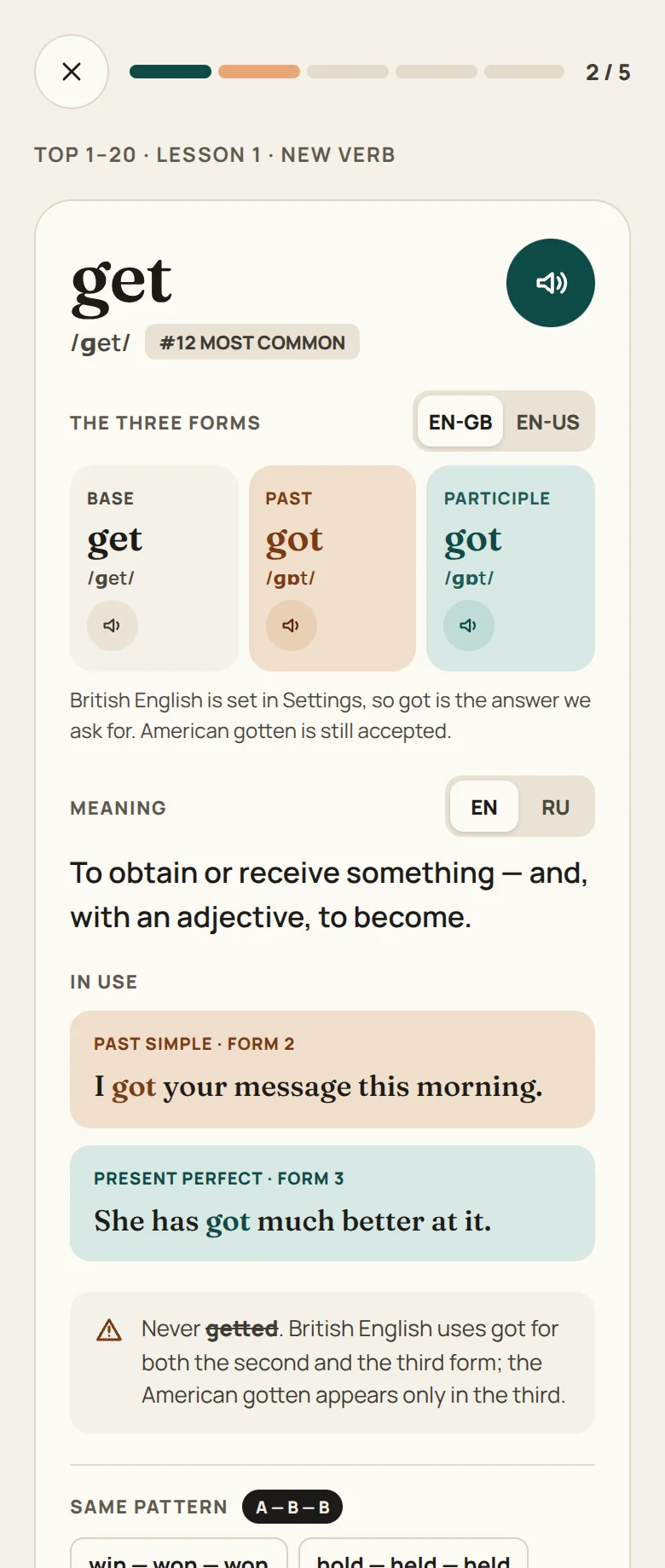
bear
Bezokolicznik
bear
/beə(r)//ber/
Past Simple
bore
/bɔː(r)//bɔːr/
Past Participle
borne
/bɔːn//bɔːrn/
TłumaczenieB2
znosić, wytrzymywać
to grin and bear it
Znaczenie po angielsku
to accept something unpleasant; to carry weight
Przykłady
- Po czasowniku modalnym · Forma 1I can’t bear the noise from the flat upstairs any longer.
- Przeczenie · Forma 1She doesn’t bear grudges, even after a big argument.
- Past Simple · Forma 2Last winter Grandpa bore the pain of his bad knee without complaining.
- Past Simple · Forma 2The old bridge bore the weight of the lorry yesterday, but only just.
- Strona bierna · Forma 3All the costs of the repair will be borne by the landlord.
- Present Perfect · Forma 3He has borne most of the blame for the defeat.
Uwaga
O narodzinach — born; w innych znaczeniach — borne: costs borne by the council. Forma przeszła to bore: she bore the pain.
 Irregular Verbs
Naucz się trzech form na dobre
Krótkie lekcje według częstości lub wzorca, nagranie każdej formy i codzienne powtórki, które przypominają dokładnie te czasowniki, które zaraz byś zapomniał.

 Zainstaluj na telefonieZeskanuj aparatem telefonu, aby pobrać aplikację