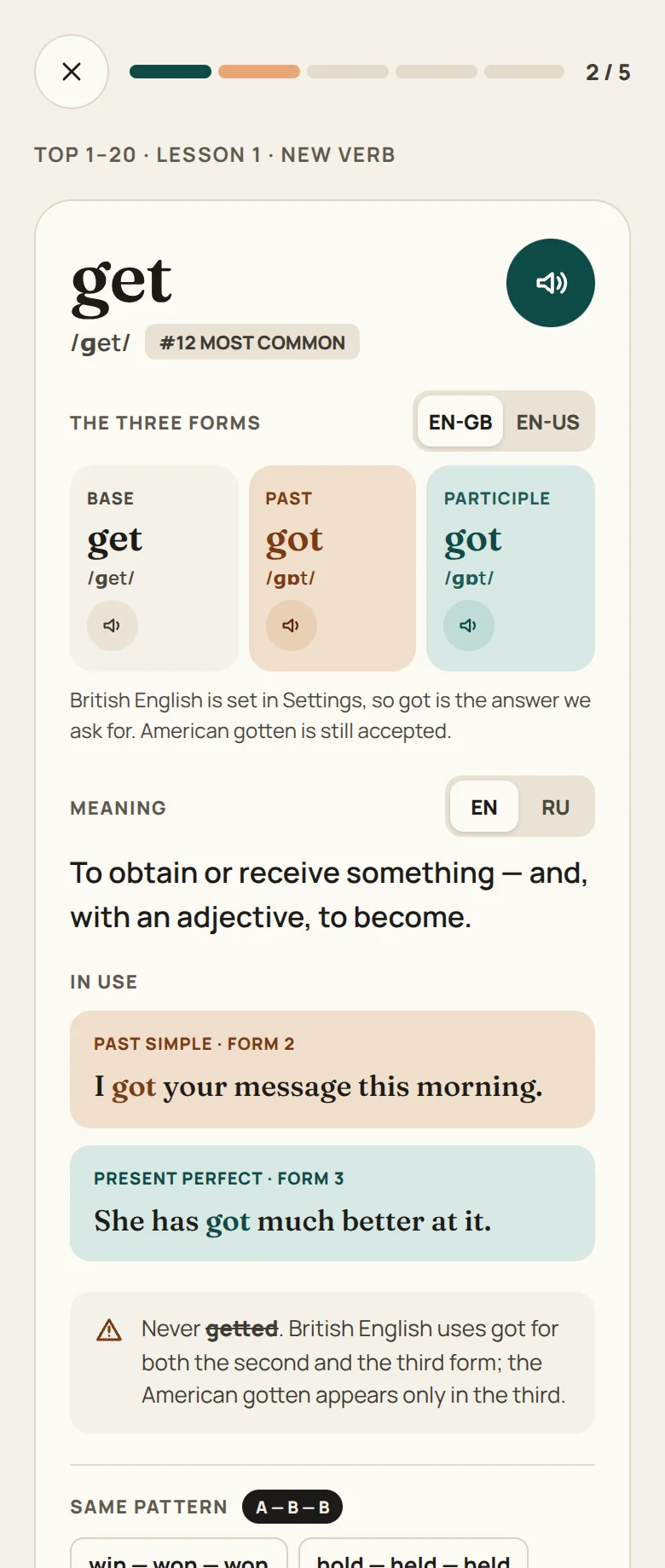
bear
Infinitivo
bear
/beə(r)//ber/
Passado simples
bore
/bɔː(r)//bɔːr/
Particípio passado
borne
/bɔːn//bɔːrn/
TraduçãoB2
suportar, aguentar
to grin and bear it
Significado em inglês
to accept something unpleasant; to carry weight
Exemplos
- Depois de verbo modal · 1ª formaI can’t bear the noise from the flat upstairs any longer.
- Negativa · 1ª formaShe doesn’t bear grudges, even after a big argument.
- Simple past · 2ª formaLast winter Grandpa bore the pain of his bad knee without complaining.
- Simple past · 2ª formaThe old bridge bore the weight of the lorry yesterday, but only just.
- Voz passiva · 3ª formaAll the costs of the repair will be borne by the landlord.
- Present perfect · 3ª formaHe has borne most of the blame for the defeat.
Cuidado
Para o nascimento se diz born; em todos os outros casos, borne: costs borne by the council. O passado simples é bore: she bore the pain.
 Irregular Verbs
Aprenda as três formas de uma vez por todas
Lições curtas por frequência ou por padrão, áudio de cada forma e revisões diárias que trazem de volta exatamente os verbos que você está prestes a esquecer.

 Instale no celularEscaneie com a câmera do celular para baixar o app