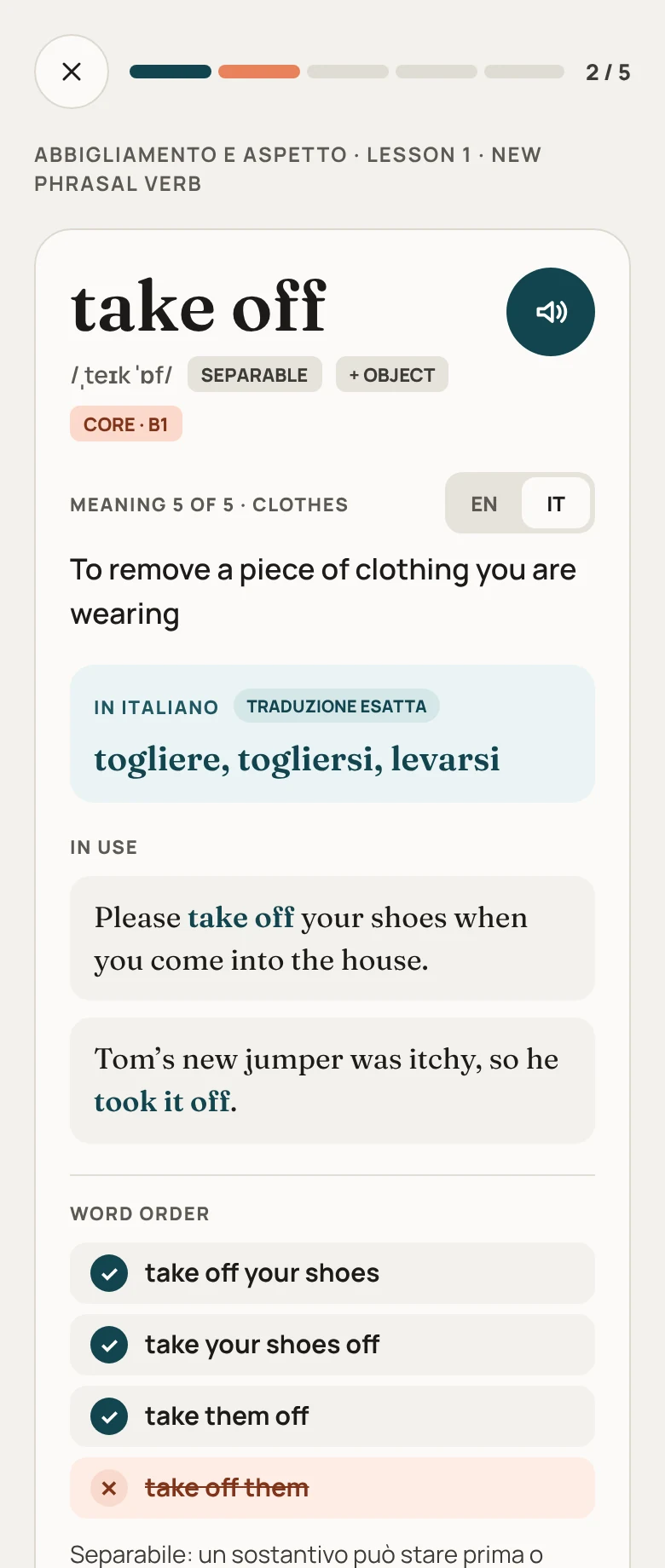
bring up
/ˌbrɪŋ ˈʌp/
IN ITALIANO
crescere, allevare, tirare su
To care for a child until they are an adult
IN ITALIANOTRADUZIONE ESATTA
crescere, allevare, tirare su
Esempi d’uso
- 1My grandparents brought me up after my parents moved abroad for work.
- 2It isn’t easy to bring up three children on one salary.
- 3Leo was brought up by his aunt and went to school in a small village.
- 4They brought their son up to say please and thank you.
- 5It must be really hard work bringing up twins on your own.
Ordine delle parole
- bring up the children
- bring the children up
- bring them up
- bring up them
Separabile: un sostantivo può stare prima o dopo up. Un pronome (it, them, him) va sempre tra il verbo e up.
To start talking about a particular subject
IN ITALIANOTRADUZIONE ESATTA
sollevare, tirare fuori, menzionare
Letteralmente: «portare su»
Esempi d’uso
- 1Tom brought up the subject of money during dinner with his parents.
- 2I wanted to ask about a pay rise, but I was too nervous to bring it up.
- 3Please don’t bring up politics when my grandparents come for lunch on Sunday.
- 4Ben has an idea about the new timetable and will bring it up at Monday’s meeting.
- 5Why did you have to bring up my old school reports in front of everyone?
Ordine delle parole
- bring up the subject
- bring the subject up
- bring it up
- bring up it
Separabile: un sostantivo può stare prima o dopo up. Un pronome (it, them, him) va sempre tra il verbo e up.
To make information appear on a computer screen
IN ITALIANOTRADUZIONE ESATTA
aprire, visualizzare, richiamare
Esempi d’uso
- 1The doctor brought up my test results on her computer.
- 2I can’t remember the address, but I’ll bring it up on my phone.
- 3Could you bring up last month’s sales figures on the big screen so everyone can see them?
- 4Ask the receptionist and she’ll bring your booking up on her screen.
- 5Nobody could find the email, so Raj brought it up on his laptop and read it aloud.
Ordine delle parole
- bring up the file
- bring the file up
- bring it up
- bring up it
Separabile: un sostantivo può stare prima o dopo up. Un pronome (it, them, him) va sempre tra il verbo e up.
 Phrasal Verbs
1000 phrasal verbs in 25 temi, con ripassi che non te li fanno dimenticare
Qui trovi qualche domanda. Nell’app, 16 modalità di esercizio, ogni significato sulla sua scheda, traduzioni e ripetizione dilazionata che ti avvisa quando è ora di ripassare.
In arrivoiOS e Android