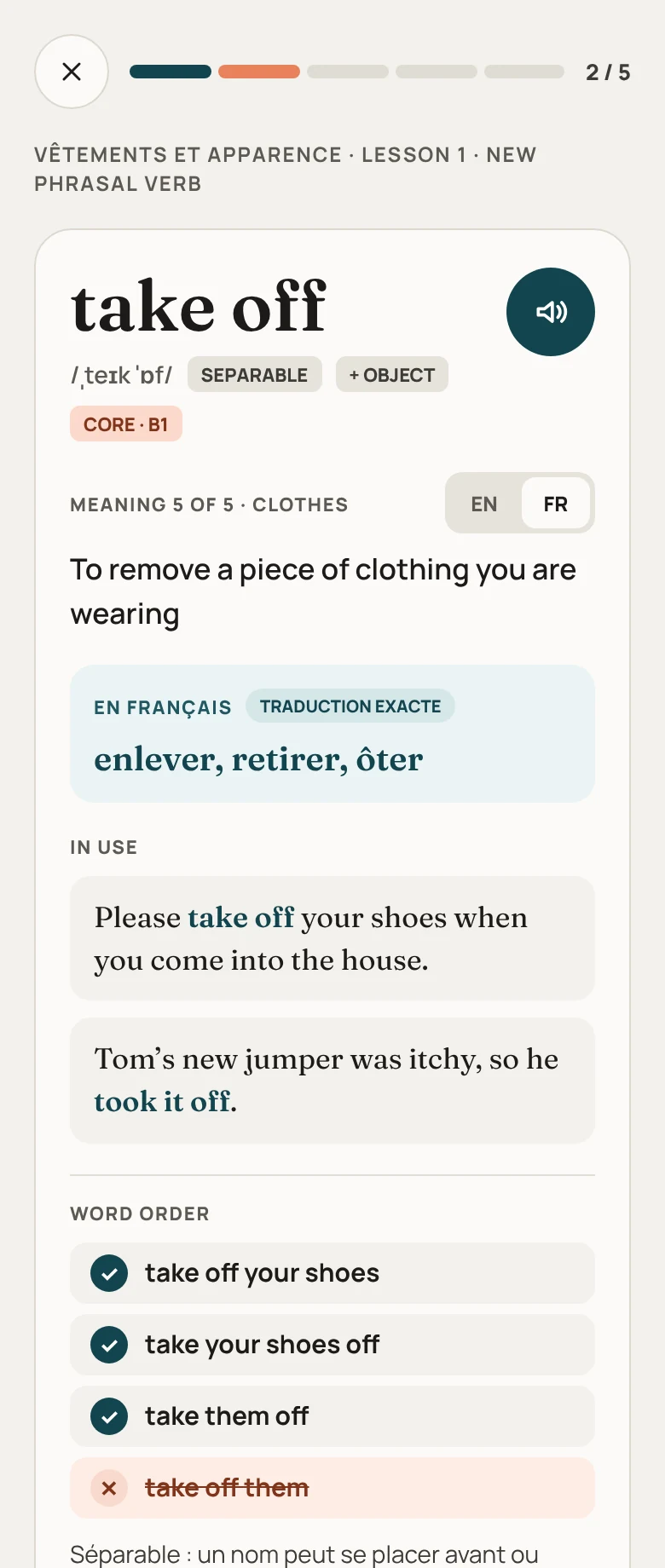
lay off
/ˌleɪ ˈɒf/
EN FRANÇAIS
licencier (pour motif économique), mettre au chômage
To stop employing someone because there is not enough work
EN FRANÇAISTRADUCTION EXACTE
licencier (pour motif économique), mettre au chômage
En contexte
- 1The factory laid off two hundred workers when orders fell.
- 2Business was so quiet that the restaurant had to lay some of us off.
- 3Hundreds of staff were laid off when the airline lost money.
- 4The owner didn’t want to lose his cooks, but with no customers he had to lay them off.
- 5If sales don’t improve, the company may lay off a quarter of its staff.
Ordre des mots
- lay off workers
- lay workers off
- lay them off
- lay off them
Séparable : un nom peut se placer avant ou après off. Un pronom (it, them, him) se place toujours entre le verbe et off.
Contraire
take on
To stop criticising or annoying someone
EN FRANÇAISTRADUCTION EXACTE
laisser tranquille, ficher la paix à, arrêter d'embêter
En contexte
- 1Lay off him, will you? He’s had a really awful day.
- 2Mum, can you lay off me about the exam? I’m already stressed enough.
- 3Tom kept teasing his sister about her haircut until their dad told him to lay off her.
- 4Tell your friends to lay off Emma; she’s had enough of their jokes about her new glasses.
- 5Ever since he missed that penalty, the newspapers just won’t lay off the poor goalkeeper.
Ordre des mots
- lay off your brother
- lay off him
- lay your brother off
Inséparable : le complément se place toujours après off — un nom comme un pronom.
Sens proche
 Phrasal Verbs
1000 phrasal verbs en 25 thèmes — avec des révisions qui les gardent en mémoire
Ici, quelques questions. Dans l’app : 16 modes d’entraînement, chaque sens sur sa propre fiche, des traductions et une répétition espacée qui vous dit quand réviser.
Bientôt disponibleiOS et Android